

Charger Dash Pinout, Bench Testing, CAN Wake-Up and 24C16 Programming
This guide is written for instrument cluster repair shops, auto electronics technicians and workshop owners who service Dodge Charger dashboards professionally. It focuses on the 2011-2014 Dodge Charger cluster built by Continental and explains how the hardware is structured, which failures are most common, and how FORZA 614 helps with bench testing, CAN wake-up and diagnostic programming.
Odometer value reset in Dodge Charger instrument cluster
If you repair clusters for a living, this is the kind of dashboard that benefits from proper bench workflows, direct hardware analysis and controlled programming rather than guesswork in the vehicle. The goal here is simple: help workshops diagnose faster, repair more units in-house and offer a lower-cost alternative to dealer replacement.
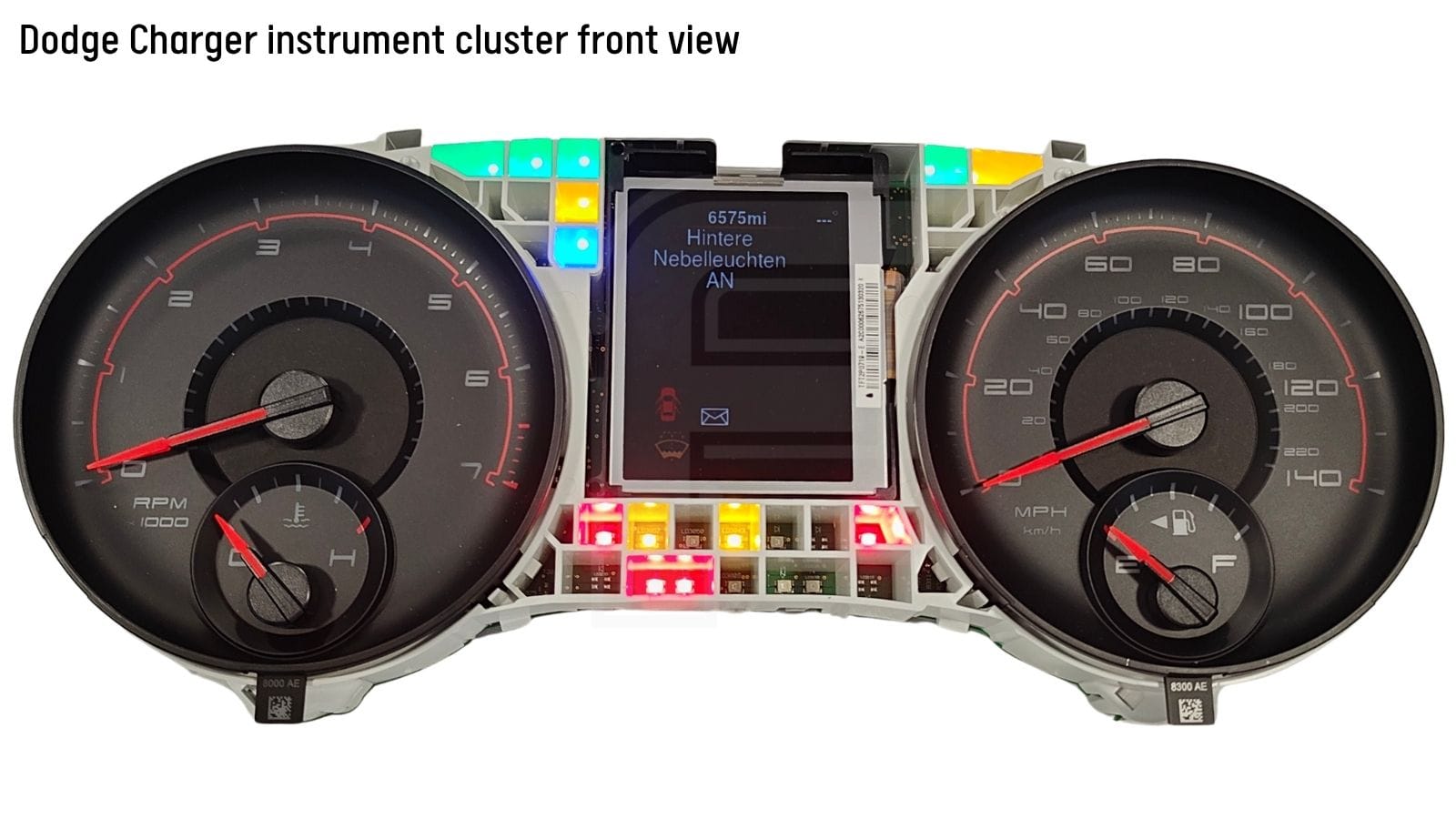
Cluster Internal Hardware
The 2011-2014 Dodge Charger instrument cluster uses a multi-processor architecture built around a primary NEC mcu and supporting eeprom memory and graphics components. In practice, this means the cluster is not just a simple gauge pack - it is a full electronic module with several interacting subsystems.
Typical hardware blocks in this cluster include:
- MCU: NEC D70F3427
- EEPROM: 24C16
- Parallel NOR Flash: S29GL128N11TFA02
- SDRAM: Micron 48LC4M32B2
- Graphics processor: Fujitsu MB86276
- Center display: TFT2P0719-E color LCD module
For a repair shop, this matters because symptoms that look like a “dead cluster” may actually come from the power rail, the wake-up logic, the graphics path or EEPROM data corruption rather than a single failed component.
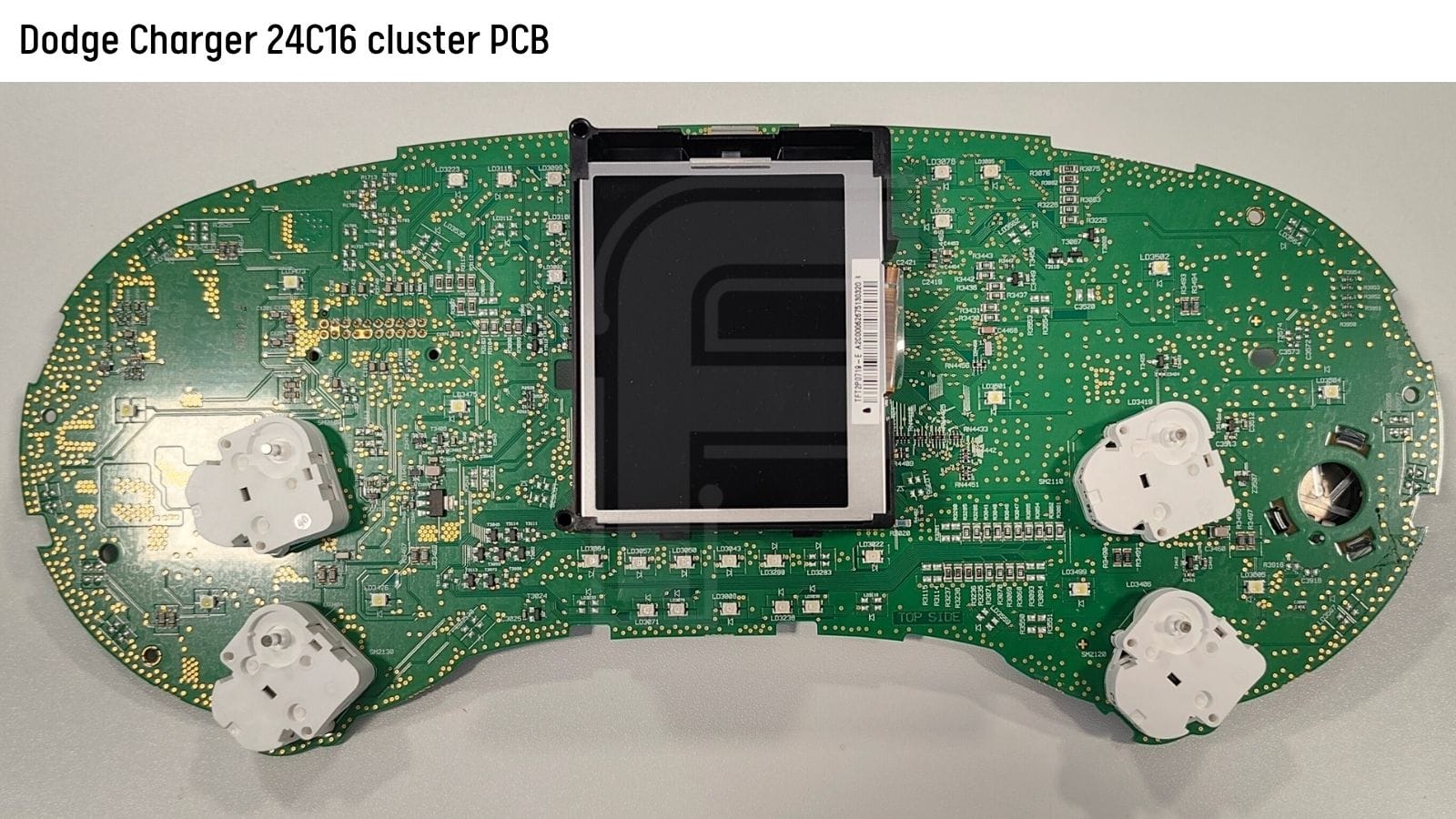
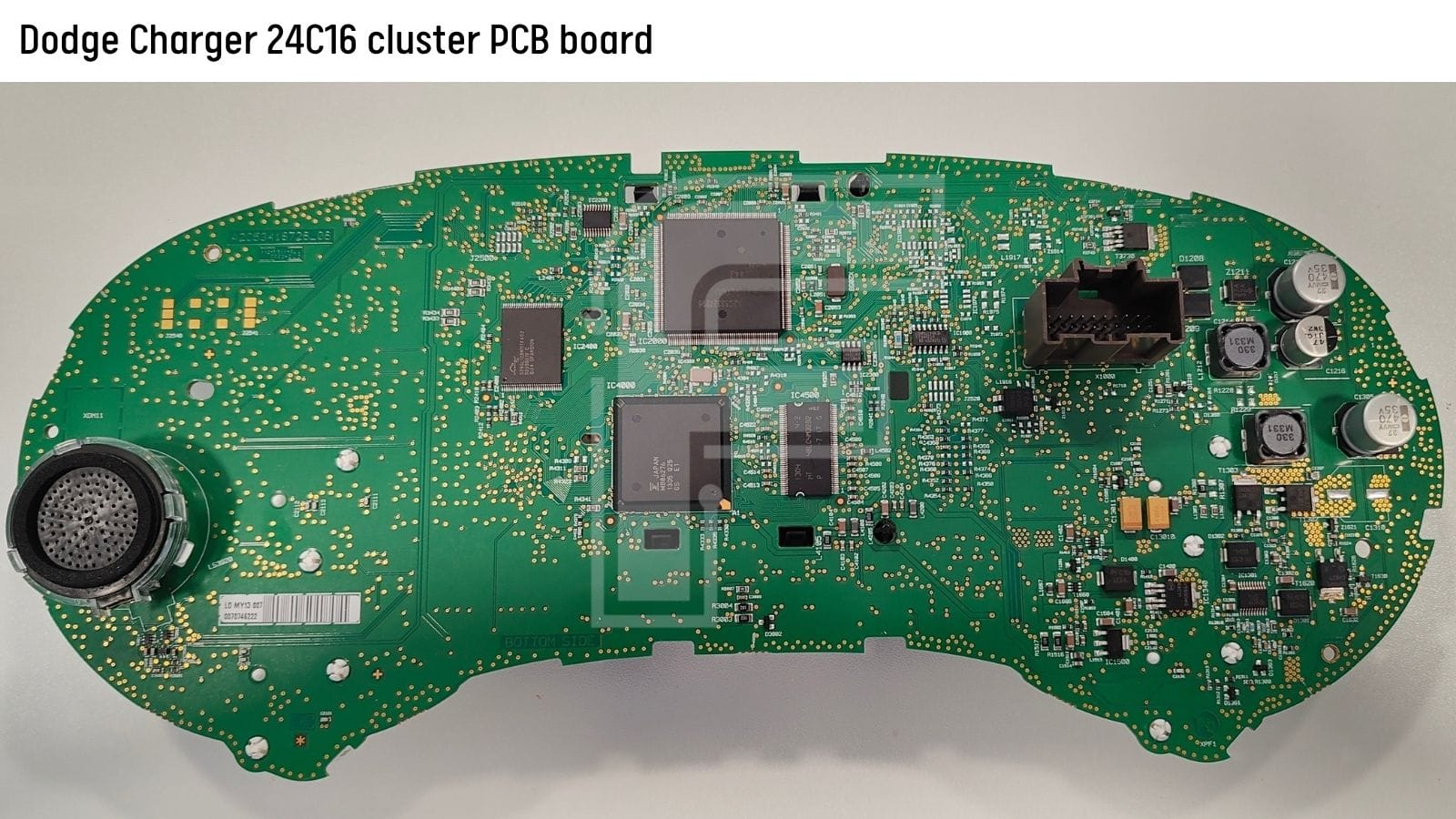
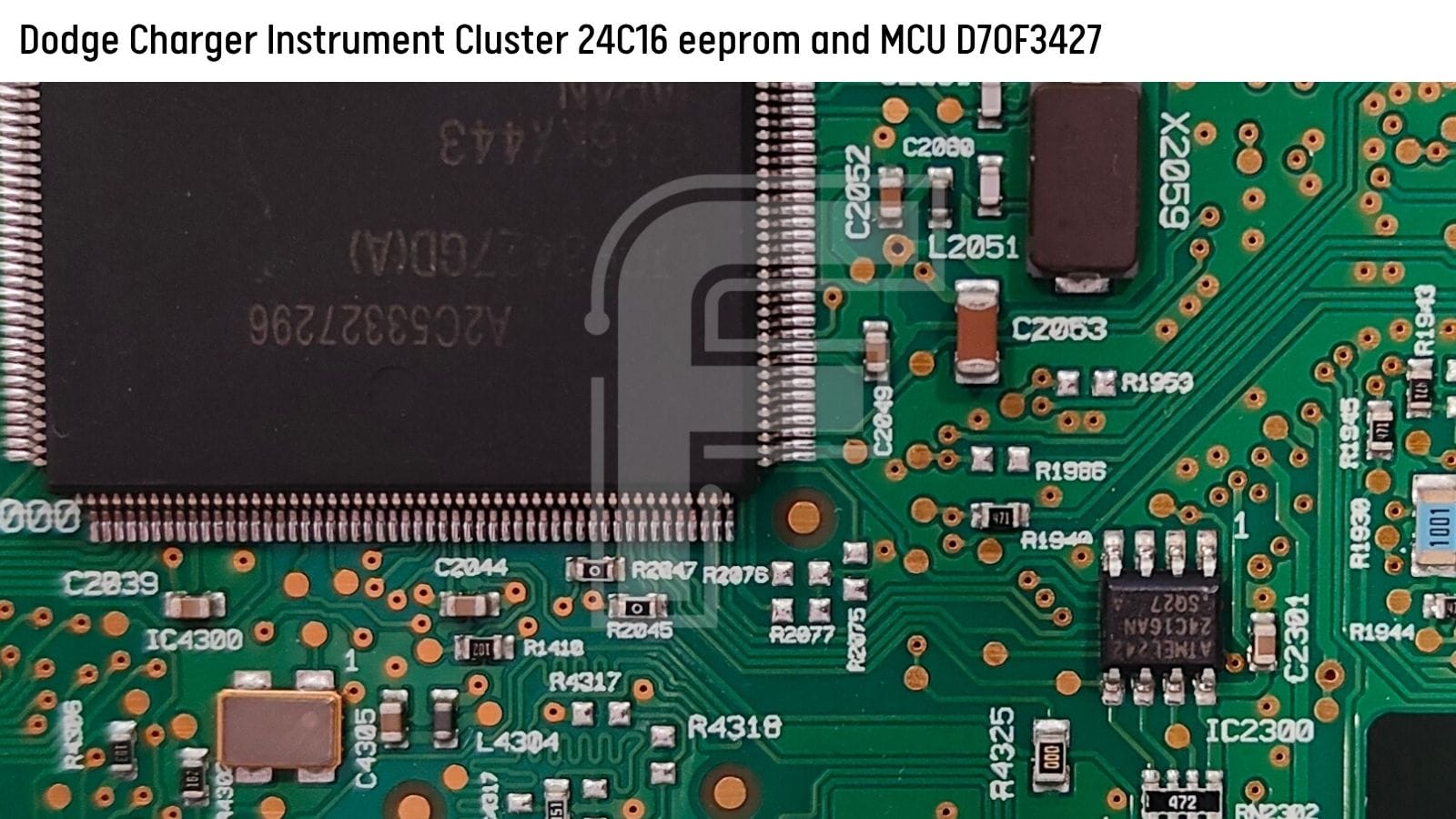
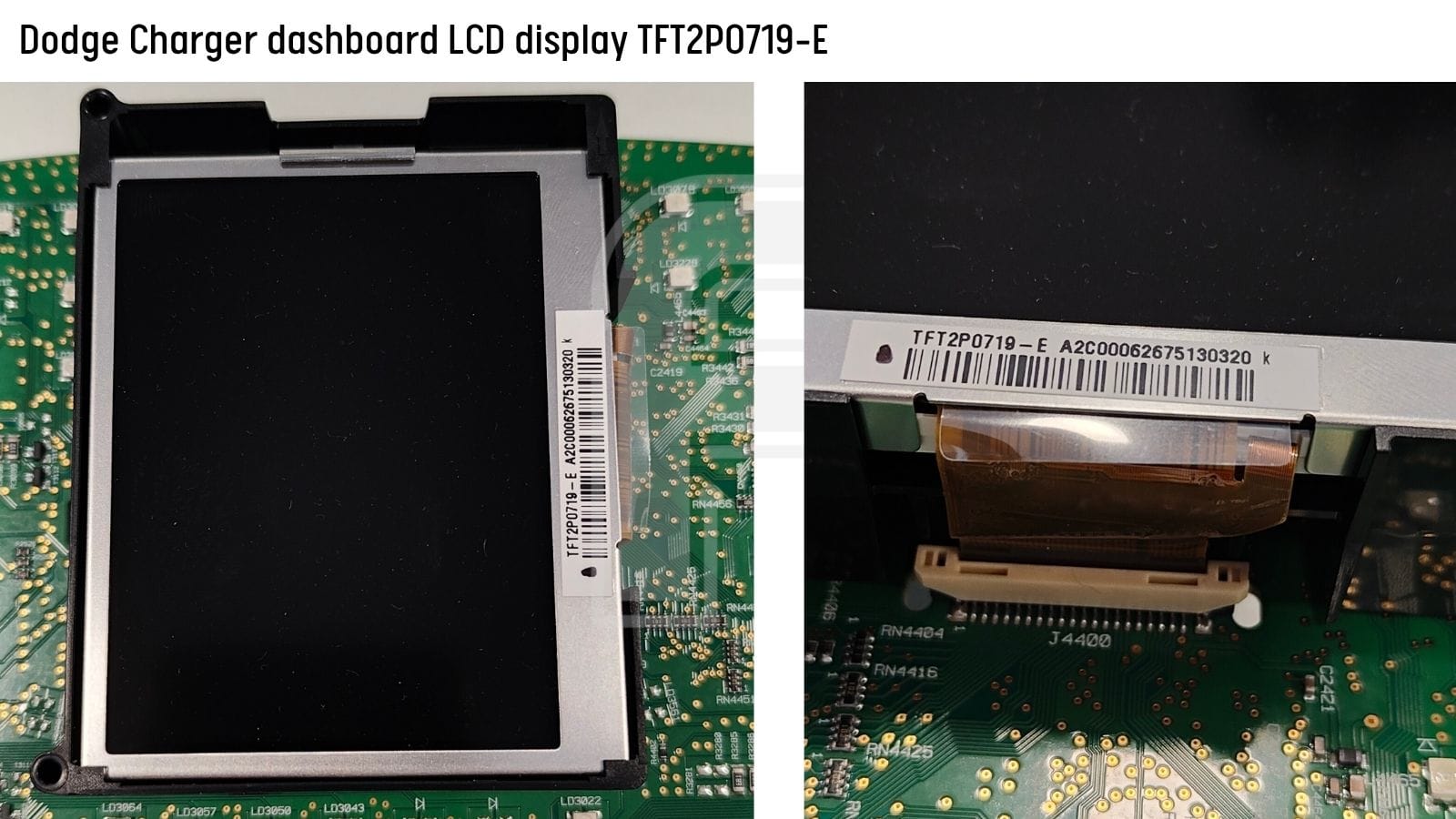
MCU: D70F3427
Eeprom: 24C16
Display LCD: TFT2P0719-E
Common Failure Symptoms
These Charger clusters are known for a few repeatable workshop-level issues:
- Complete breakdown
The entire instrument panel may go dark, reboot randomly or fail to start at all. - Dim or missing backlight
In some cases the cluster powers up partially, but the screen remains dark or only faintly visible. - Gauge problems
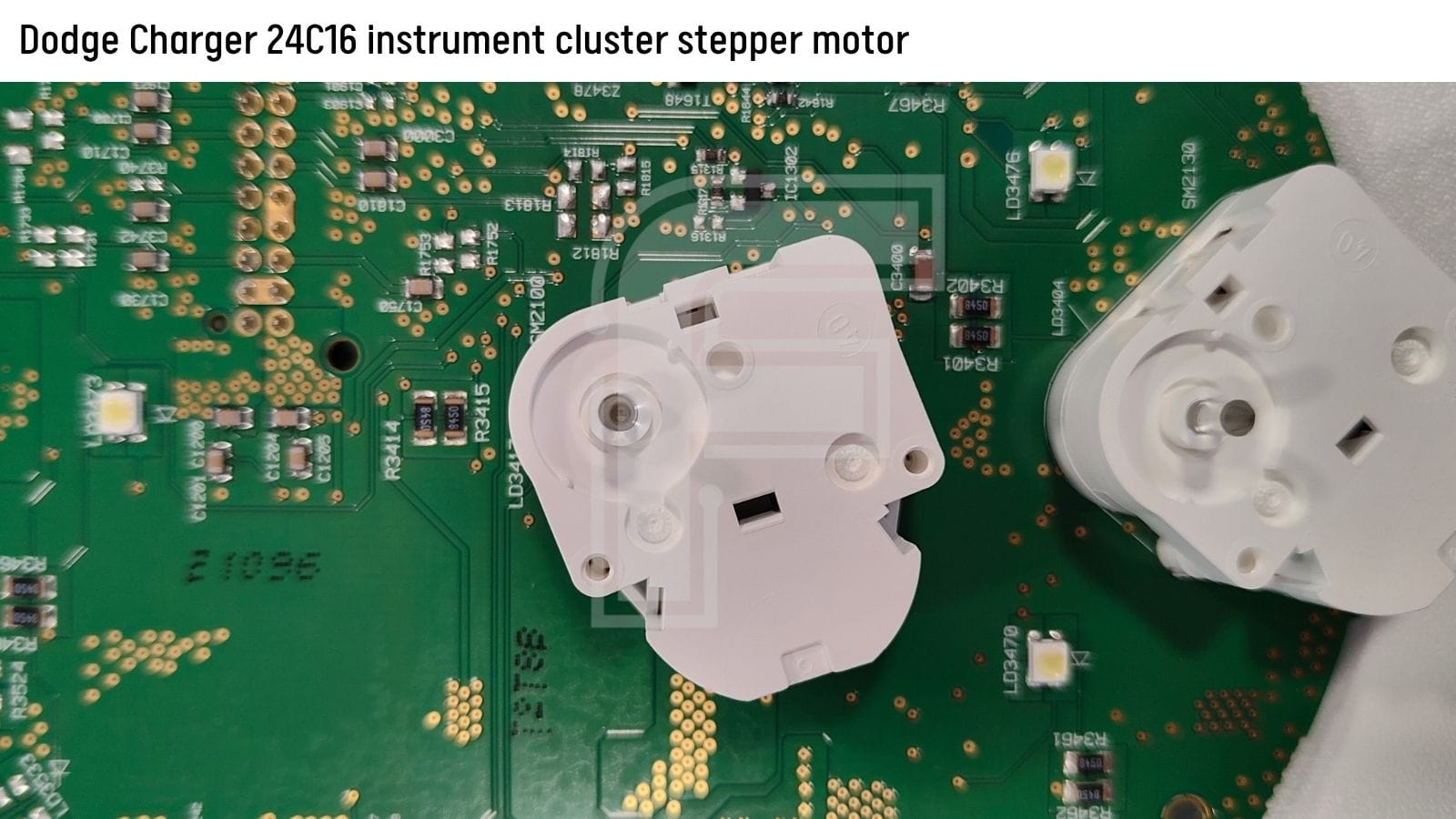
Speedometer, tachometer, fuel or coolant needles can stick, lag or read incorrectly. - Communication faults
Vehicle-wide errors such as U0155 can appear when the cluster drops off the network. - “No Bus” message
This often points to a CAN communication problem inside the cluster or in the network path feeding it. - Donor cluster mismatch.
Used cluster swaps can trigger mileage, VIN or configuration issues if the unit is not adapted correctly.
For technicians, the important point is that these are usually repairable electronics faults.
TFT2P0719-E LCD Center Display
The center screen on this Charger cluster is a color TFT module, part number TFT2P0719-E. It's a compact display, but a fairly common failure point - dimming, flickering, or going fully black are the usual complaints. The good news for workshops: this display can be unplugged and swapped on its own, without needing to reprogram or reconfigure anything on the board. Replacement TFT2P0719-E units are available on the aftermarket, so a display failure doesn't have to mean sourcing a whole donor cluster.
Bench Testing with FORZA 614
One of the biggest challenges with this Charger cluster is that +12V and GND alone are not enough to make it behave like it does in the car. The unit typically remains dark or only partially active unless it receives the proper CAN-bus wake-up frames.
This is where FORZA 614 becomes valuable in a workshop:
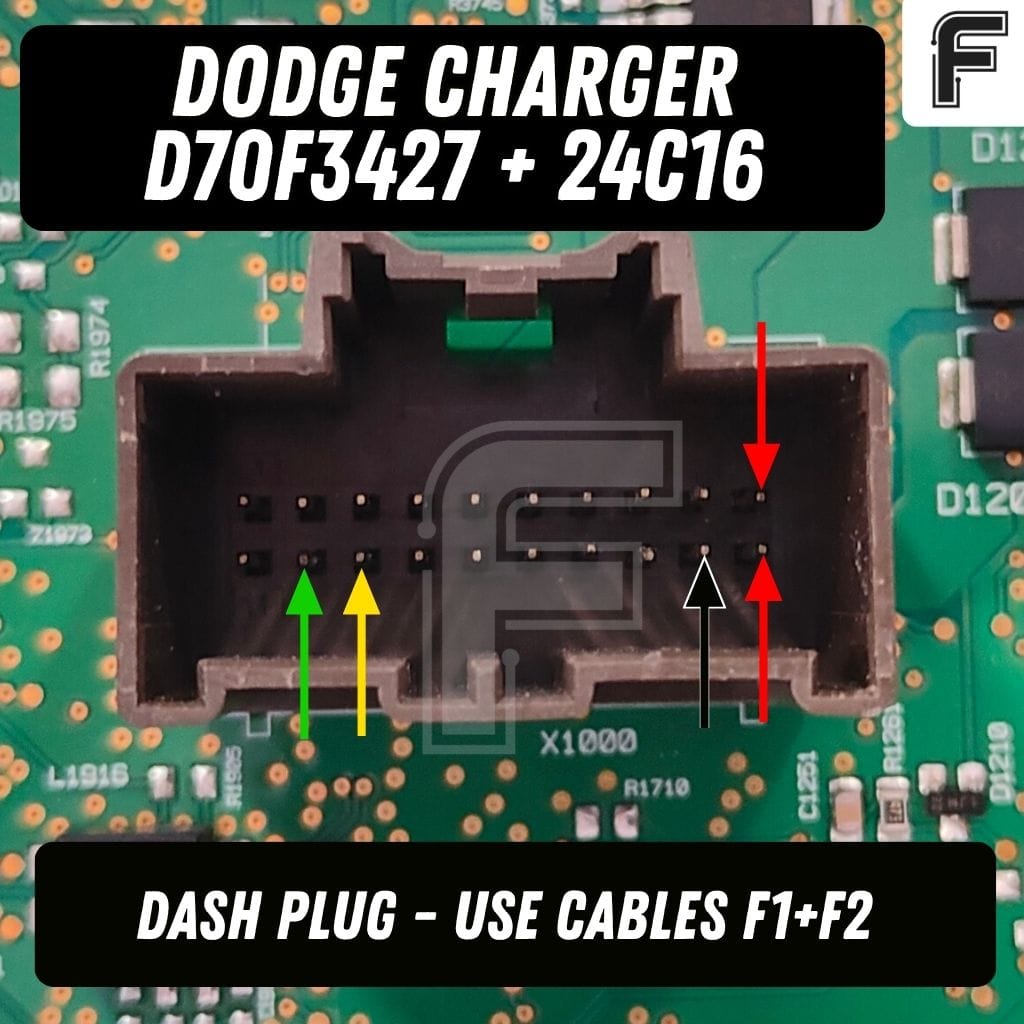
- Connect the cluster on the bench using the proper harness and pinout.
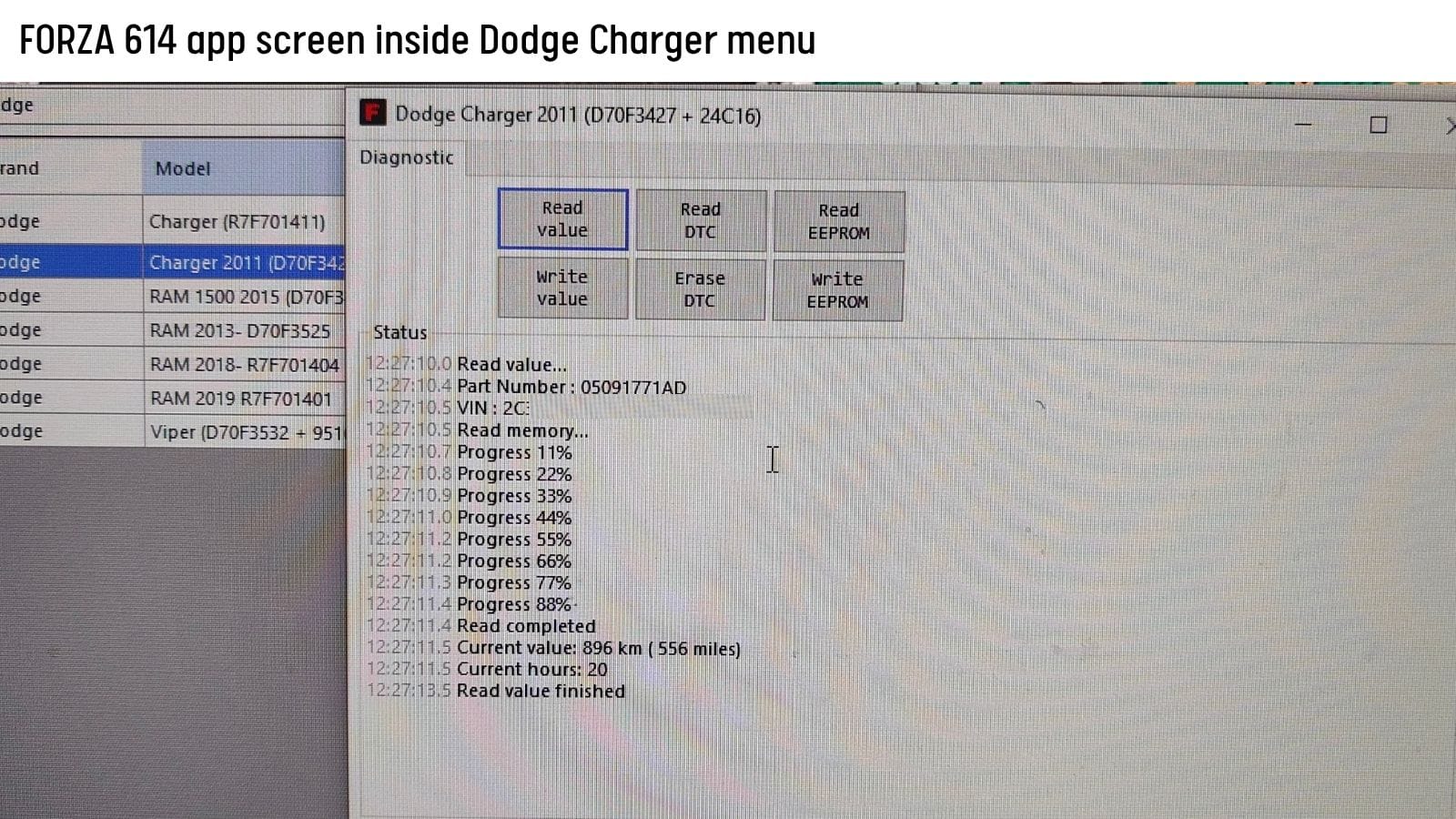
- Use FORZA 614 to send the required CAN wake-up frames - just clik on READ VALUE button.
- Bring the cluster out of sleep mode automatically.
- Verify full backlight, display operation and gauge sweep on the desk.
- Test the cluster before reinstalling it into the vehicle.
For a repair business, that means less time chasing “maybe it’s the car, maybe it’s the dash” and more time confirming whether the fault is internal to the cluster.
Dodge Charger Dashboard Pinout
24C16 Programming and Data Work
The 24C16 EEPROM is the memory device that stores important configuration and vehicle data for this cluster. In donor-cluster situations, that memory often becomes the key to a clean adaptation.
- EEPROM 24C16 Note: The full 24C16 contents can be read diagnostically - via the dash connector or OBD2 - which is enough to back up the original data before starting a repair or donor swap. Diagnostic writing of the full memory is not supported, though. For a complete 1:1 clone onto a donor cluster, you'll need a serial EEPROM programmer connected directly to the 24C16 chip.
In a professional repair setting, the usual workflow is:
- diagnose the cluster on the bench,
- back up or read the memory data when needed,
- replace or adapt the donor unit,
- then verify the result by bench boot and vehicle communication checks.
That is the kind of service that adds value for the customer and keeps the repair inside your workshop instead of sending the client to a dealer.
Donor Cluster Replacement and Adaptation
When a used Charger cluster is installed, the workshop usually needs to deal with mileage, configuration and vehicle-specific compatibility. Depending on the vehicle setup, the swap may also require module alignment or communication relearning.
For shops, this is where a clean process matters:
- confirm the donor hardware matches the model year and platform,
- handle the memory data correctly,
- verify communication after installation,
- and make sure the cluster works good on the bench before final fitting.
Why This Repair Model Works for Workshops
This kind of Charger dashboard is a good example of why bench repair is profitable. A technician who can test the cluster on the bench, confirm the fault, and program the replacement or repaired unit has a much stronger service offer than a shop that only “swaps parts.”
With the right workflow, your business can offer:
- mail-in cluster repair,
- used cluster adaptation,
- board-level diagnostics,
- programming and verification,
- and a lower-cost solution compared with dealer replacement.
That is exactly the model FORZA 614 is meant to support: repeatable cluster work for professional electronics shops.
How FORZA 614 Helps
FORZA 614 is designed to reduce the biggest headaches in cluster work:
- wiring uncertainty,
- CAN wake-up and bench activation problems,
- data file read/write operations,
- odometer value adaptation.
In this application, FORZA 614 helps by:
- sending the correct wake-up sequence,
- making the cluster boot on the bench,
- allowing technicians to verify screen and gauge behavior,
- supporting diagnostic programming workflows for supported functions.
The practical benefit is simple: it saves time, improves workshop safety, gives you more programming options, and lets you run the speedometer on the bench before reinstalling the cluster. That means you can take on jobs that your competitors might refuse.
Subscription Model
FORZA 614 uses a flat subscription model. For workshops, that is useful because the business cost stays predictable even when you work on many clusters in a month.
That means:
- one hardware purchase,
- one active subscription,
- no per-job token surprises,
- automatic access to new software and pinout updates while the subscription is active.
FAQ - Dodge Charger speedometer
Can the Charger cluster be tested on the bench with only +12V and GND?
In most cases the cluster needs the correct CAN wake-up sequence to fully boot and illuminate the screen
What are the most common failures?
Black screen, intermittent reset, dim backlight, gauge errors and communication faults such as U0155 or “No Bus.”
Can a used cluster be adapted?
Yes, but it needs correct data handling and verification so mileage, configuration and communication are consistent with the vehicle. In some cases
Why use FORZA 614?
Because it simplifies bench activation, reduces wiring guesswork and helps workshops test and program clusters faster.
Download our PC application and look around


