

How FORZA 614 handle the Ford Mustang Virtual dashboard?
The wave of advanced Ford platform updates keeps rolling over at FORZA 614! Today, we are dissecting one of the most exciting dashboards to enter modern automotive electronics workshops: the Ford Mustang Virtual Instrument Cluster.
When this generation of Ford digital dashes hit the market, it blew users away.
It marked a total departure from traditional analog needles, bringing a much-needed breath of fresh air and modern technology to the muscle car segment.
However, as any specialized speedometer shop knows, new technology always brings new, complex failure modes.
Ford Mustang digital cluster Hardware inside
When you strip down the Mustang virtual cluster casing, you realize this isn't a standard dashboard - it's practically a mini-computer.
Key components on the motherboard:
- The Main Processor: Driven by a high-performance Freescale/NXP SPC5645SVVU microcontroller (carrying the MCU mask code 1N29D) in BGA package.
- The EEPROM Memory: Located on the reverse side of the PCB, managing vital configuration markers via a standard 24C32 EEPROM chip.
- The LCD Display: The visual system relies on a Chinese-manufactured LS124M5LZ01A high-resolution digital display panel.
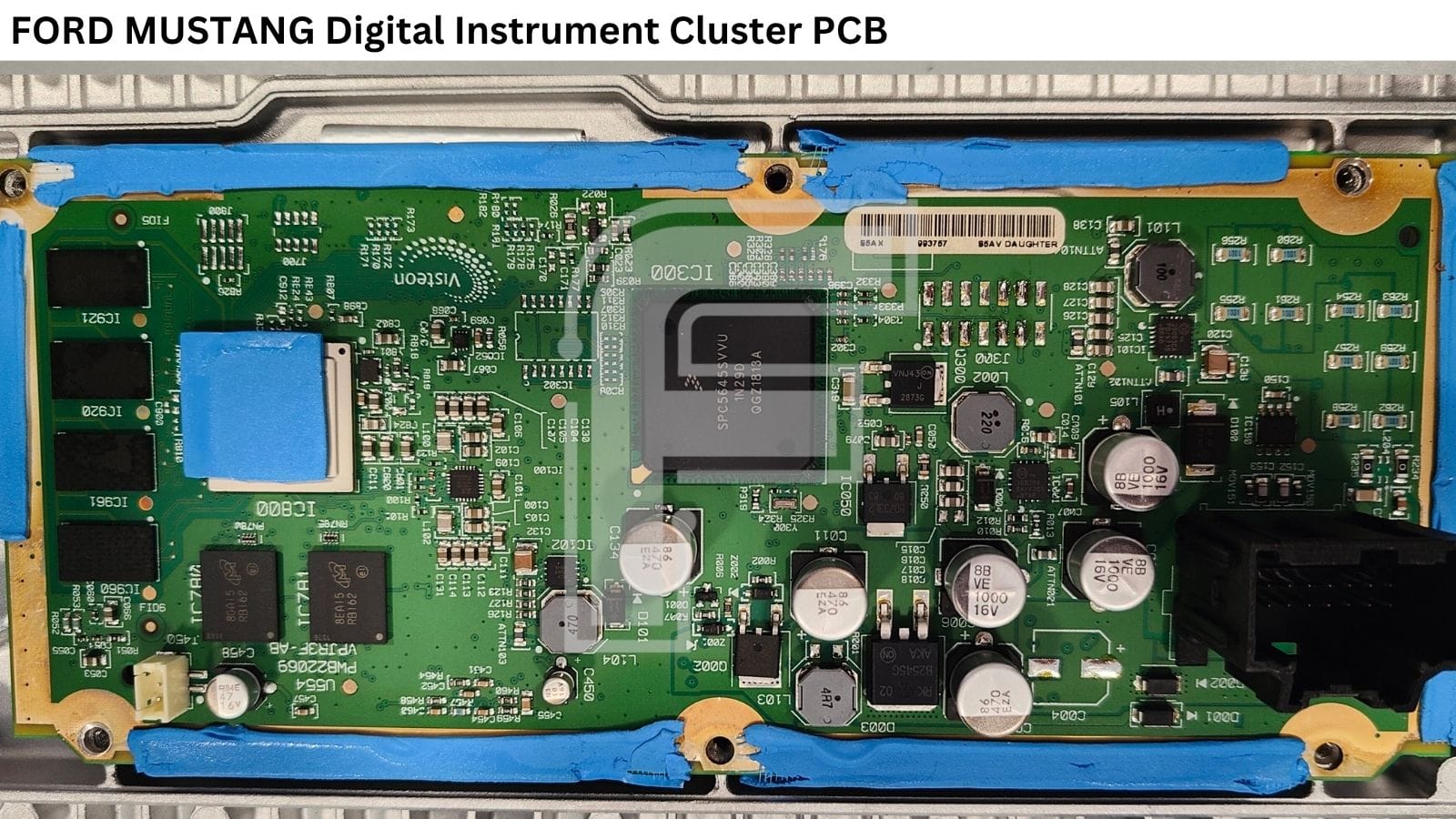
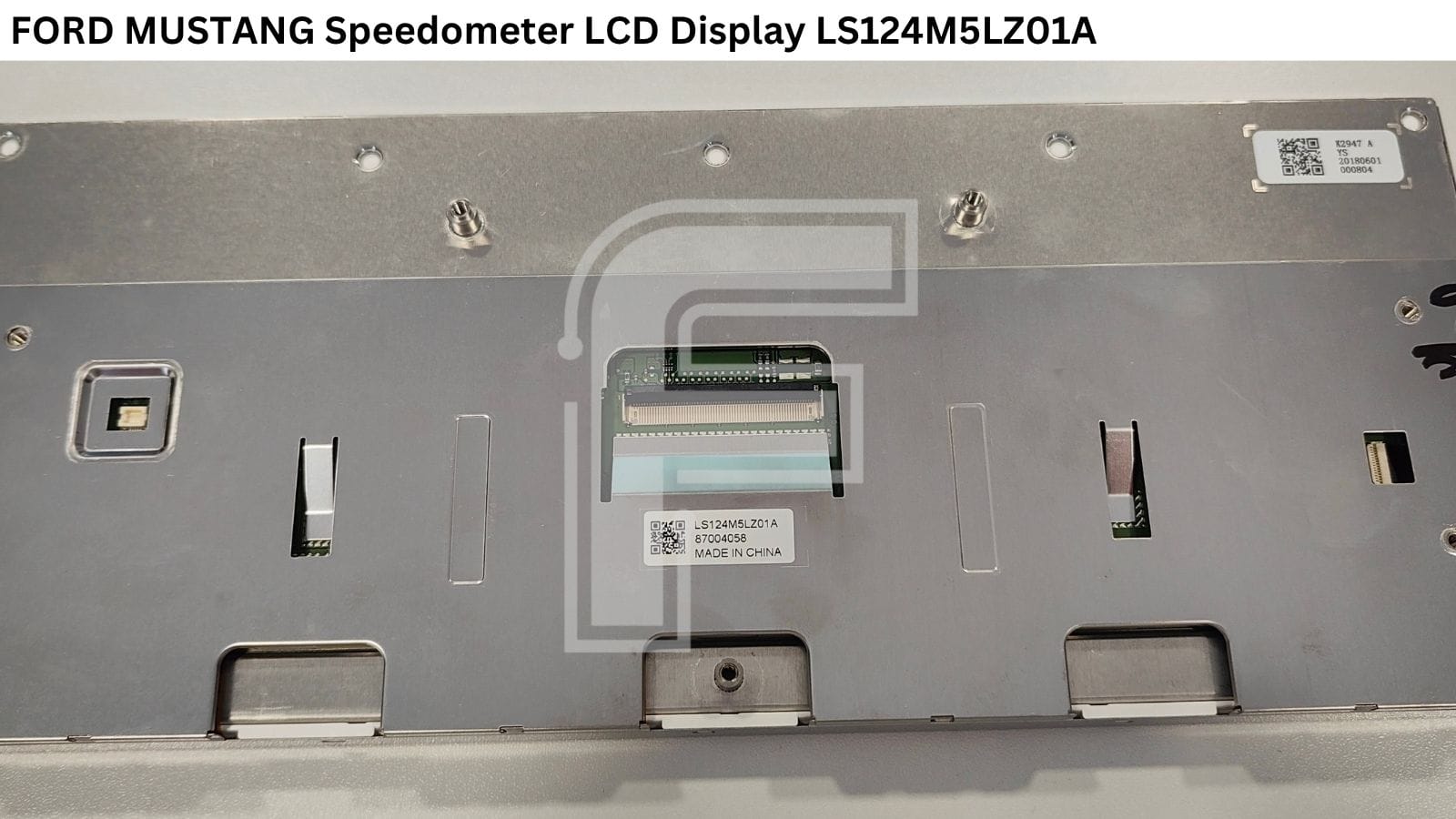
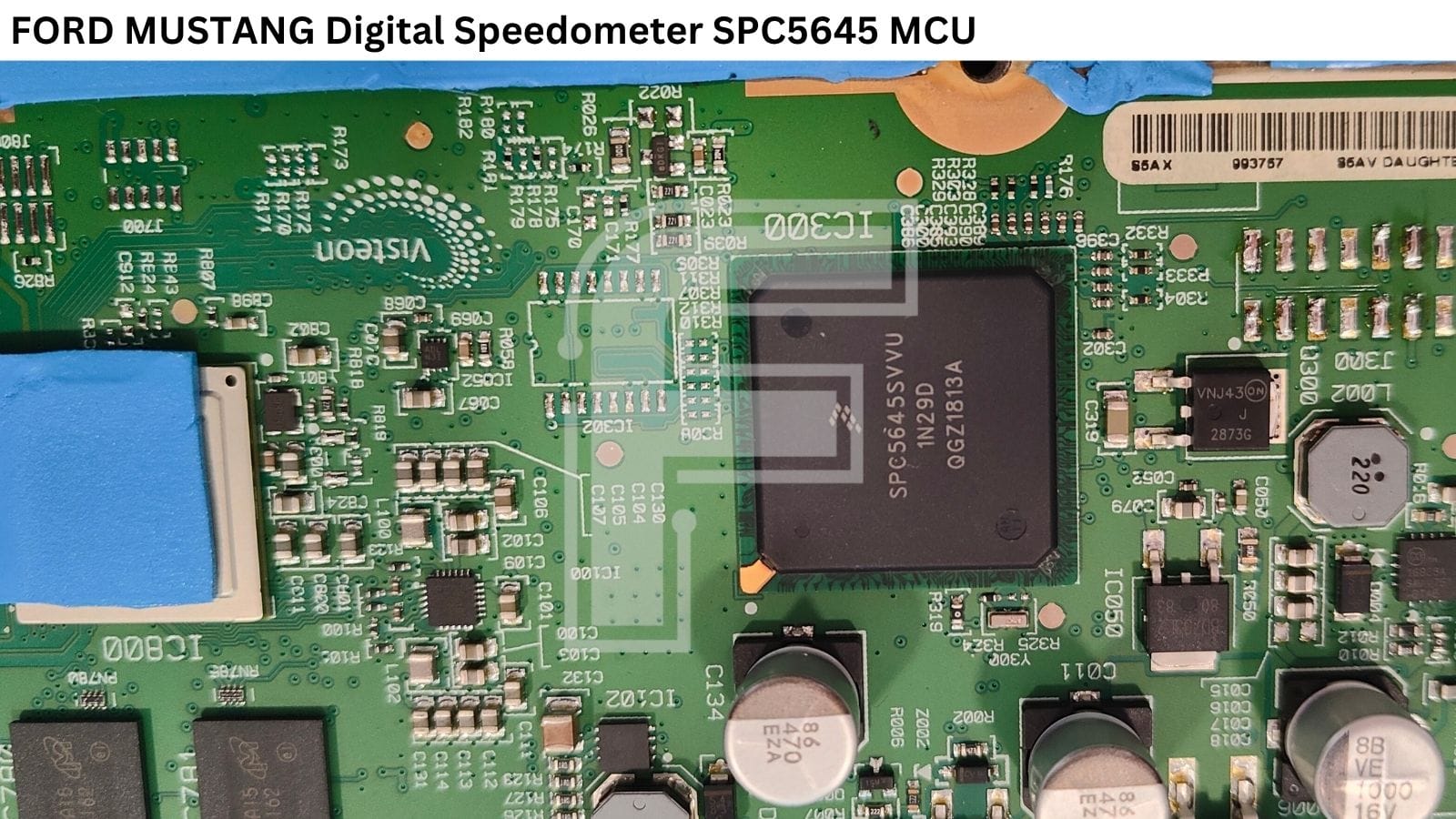
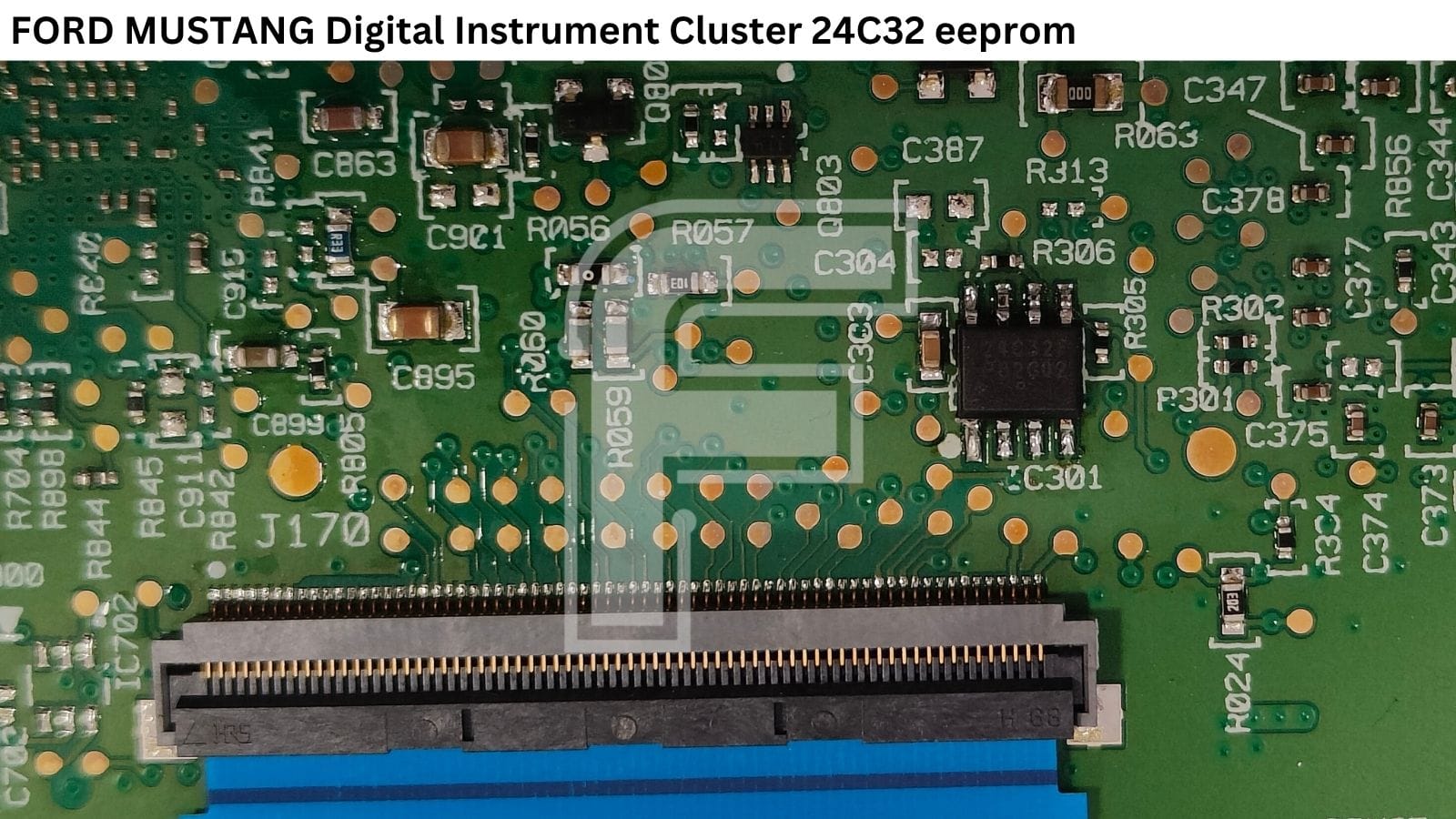
Looking closely at the motherboard layout, the density of BGA chips packed into such a tiny space is staggering. To combat the extreme thermal output, Ford engineered a heavy, solid-aluminum rear housing acting as a dedicated heatsink.
⚠️ Workshop Warning: If you attempt to power up this Mustang cluster on your workbench without the aluminum rear housing attached, the PCB components will heat up so fast and so intensely that touching the bare board will literally burn your fingers.
MCU: SPC5645
Eeprom: 24C32
LCD Display: LS124M5LZ01A
Common Failure Modes:
Troubleshooting the Mustang Display
The exact feature designed to give the cluster its "wow factor" is, unfortunately, its most frequent point of failure: the display itself.
Repairing these digital dashboards is far from easy. If the issue is localized entirely within the glass matrix, the most cost-effective and reliable solution is a complete panel replacement. However, more often than not, the root cause lies deeper within the motherboard circuitry due to thermal stress on the BGA solder joints. Troubleshooting these intermittent power drops or graphic artifacts requires advanced electronic repair skills and solid diagnostic stability.
How to Power Up and Wake Up the Mustang Virtual Cluster on the Bench?
Testing this complex unit off-board is a major bottleneck if you don't have the right tools. To successfully boot up this Mustang cluster on your table, you need a 4-wire interface setup: Power (+12V), Ground (GND), CAN High (CAN H) and CAN Low (CAN L).
But standard power is not enough. Just like its smaller Ford siblings, this digital dash demands a proprietary, high-frequency CAN-bus wake-up handshake from the car's body module to exit sleep mode.
FORZA 614 solves this with a true "one-click" bench wake-up function.
By simply connecting the cluster through our pinout and clicking the software the read value command, FORZA 614 automatically injects the required wake-up sequences. Keep in mind that when you power up this dashboard on your table, the cluster needs about 10 seconds to fully boot up and initialize its internal systems. Only after this 10-seconds startup delay is complete can FORZA 614 successfully establish communication with the cluster on the bench.
Once it wakes up, the dash boots up instantly right on your desk. Whether a client brought the whole car to your shop or sent you the cluster in a cardboard box via mail, you can safely stress-test, run diagnostics and confirm your hardware fixes before reassembly.
Odometer Reset for Digital Retrofits and Cluster Replacements
When dealing with a hardware failure so severe that the original motherboard is unfixable, sourcing a used donor module is the logical step. Furthermore, the market for Virtual Cluster Retrofits is booming - thousands of owners are upgrading older, analog Mustang models to this gorgeous digital layout.
In both adaptation scenarios, matching the odometer metrics to the vehicle’s genuine historical record is required.
FORZA 614 handles this seamlessly. Our tool provides a dedicated odometer reset protocol that operates beautifully across both workflow paths: directly through the cluster plug pinout on your workbench or via the factory OBD2 port inside the car.
Fuel Your Workshop’s Success with FORZA 614
We are not slowing down. Our engineering team continuously pushes boundaries, dropping fresh vehicle protocols, accurate wiring diagrams, and high-res bench photos into our application every few days.
We do this to ensure your automotive electronics garage stays ahead of the competition without ever worrying about expensive single licenses, brand paywalls, or per-car token fees. Our entire universal database is fully unlocked under one simple subscription. Repairing just one high-end digital dash like this Mustang unit easily covers 3 to 4 months of your platform access.
If instrument cluster repair is your passion and your business, it’s time to upgrade your workflow.
➡️ Switch to FORZA 614 today


